Starting life on a farm, I enjoyed the years of living just outside my hometown of
427 people. Most of the residents, their
ancestors, and their descendants had lived in this area since 1820s.
When
my own small family moved to Ireland in 1985, our
adventures took us through small villages with their own populations,
much like ours, only theirs dated back to the 1700s, if not earlier. They had pubs, my own home town did not.
These villages and my own
hometown had many similarities. Those are obvious, so they do not need to be listed.
However, one striking similarity was the presence of
locals who were referred to as the “village idiots”. My parents explained this was not an insult,
but was the only way to describe this part of the populations.
But, after watching this episode of “Monty Python”, I
learned how this came to be.
This relieves my mind, as I couldn't force myself to see people that
way. My parents probably were not aware of this hidden training
program.
P. S. I
love Monty Python episodes, their unique sense of humor, and satire on
the English society. I found this video, and decided to write around
it. Hope no one is offended--that is certainly not my desire or
intention. This is a re-post from 2014.
There are so many gems of their creations available. Life of Brian, Holy Grail, Spam are great.
Cancel culture has its sights set on comedy.Unfortunately, it’s having a major negative impact on movies and comedic performances. But Monty Python’s John Cleese refuses to bow to the woke trans mob and won’t remove this one joke from a classic movie.
Offensive in today’s environment?
The hilarious scene features a man claiming that he is a woman and that he can have a baby.
Cleese is currently working on a stage production of Monty Python’s Life of Brian, a 1979 movie about a man who is mistaken for Jesus Christ.
However, actors in the stage version have allegedly told Cleese one
scene would need to be cut out of the reproduction because it was
offensive in today’s environment.
The scene in question features a character named “Stan”, who wants to become a woman and have babies.
“I want to be a woman,” Stan declares. “From now on, I want you all to call me Loretta.”
Cleese’s character Reg looks at him and bewilderingly asks, “What?”
“It’s my right as a man,” Stan fires back at Reg.
“It’s every man’s right to have babies”
The scene goes on and gets even funnier and more prophetic.
When asked why he wants to be a woman, Stan said because “I want to have babies.”
“You want to have babies?” Reg replies.
“It’s every man’s right to have babies if he wants them,” Stan yells.
When Reg informs Stan that he “can’t have babies,” Stan plays the victim card and tells him “don’t you oppress me.”
“I’m not oppressing you, Stan, you haven’t got a womb,” Reg replied.
“Where’s the fetus going to gestate? You gonna keep it in a box?”
Other characters in the scene agree that Stan can’t have babies but do believe he should have the “right to have babies.”
“What’s the point of fighting for his right to have babies when he can’t have babies?” Reg responded.
Another character answered that “it is symbolic of our struggle against oppression.”
Reg then said Stan has a “struggle with reality” for thinking he can give birth to a baby.
Monty Python is “transphobic”
Of course, critics claim the scene in the movie from 44 years ago is “transphobic.”
However, conservatives argue that it’s prophetic.
But despite the controversy, Cleese has confirmed he will not be removing the scene from the upcoming stage show of Life of Brian.
“A few days ago I spoke to an audience outside London,” Cleese wrote on Twitter. “I told them I was adapting the Life of Brian
so that we could do it as a stage show ( NOT a musical ). I said that
we’d had a table reading of the latest draft in NYC a year ago and that
all the actors – several of them Tony winners – had advised me strongly
to cut the Loretta scene. I have, of course, no intention of doing so.”
Cleese went on to say about the actors in the upcoming production
that “these were absolutely top-class Broadway performers and they were
adamant that we would not get away with doing the scene in NYC! I asked
them, ‘Are Python fans not going to come because we’re doing a scene
they’ve been laughing at for 40 years?'”
Monty Python entered our lives suddenly, with a giggle.
Just saying Monty Python makes me giggle.
Basically, the cast of Monty Python is so talented that a single word could send them off. Who can ever forever forget "Spam"?
But, today, I will remember "The Holy Grail". It is simply too convoluted to give an accurate synopsis. It is Camelot without horses, without competency in an way shape or form. Unimpressed with the French soldiers in the Keep. "Ni?"
The knight of the "Ni" (nee) knights states they "keepers of the sacred words 'Ni', 'Peng', and 'Neee-Wom" To pass they must pay a tribute of shrubbery. And so goes the rest of this incredibly stupid and funny movie. There is a monster to defeat, the rabbit of Caerchannog.
I understand that this is a private passion, and not many readers have a clue about my enjoyment of such simple pleasure. I have always been feisty, you know.
Depending whether you are of English, Irish, or Scottish heritage, the name “Oliver Cromwell” evokes entirely disparate emotions.***
Cromwell lived between 1599 – 1658, and was an intensely religious man. Every event in his life, Cromwell believed was ordained and dictated by God.
After Elizabeth I died, succession was a royal mess. James? No, how about…down to Charles I (who was captured and beheaded). Much of it was related to two religions, two churches. Catholic king? Protestant king?
***If you wish to avoid all this reading, skip on down to Monty Python's telling about Oliver Cromwell.
Parliament became a total mess as well.
Dissolved, then “Rump Parliament” (honest to goodness, this was its title) was established, consisting of those who supported beheading Charles. It was a very nervous collection of men.
Oliver Cromwell tired of the back and forth of politics, proceeded to walk in with sizable military force under his command. He dissolved the Parliament session for a time.
To keep this Commonwealth from crumbling, Cromwell (with his loyal military) assumed charge of ensuing chaos, suppressing any and all uprising.
England was fairly easy to deal with, so Cromwell moved onto Ireland, where populations were heavily Catholic and were loyal to Charles 1.
To say Cromwell dealt harshly is ridiculous. His slaughter and subjugation of Ireland 1649-1653 resulted in near-genocide of all Catholics.Cromwell moved onto Scotland to do the same. In Ireland, if one says “Cromwell”, responses will vary, but all vehement in some way. It was fairly common for a big huff, a strong mucous spittle on the ground, a swear word of some sort, and perhaps other actions. This is true at this current history.
Oliver Cromwell became Lord Protector of the Commonwealth of England, Scotland, and Ireland. His ironfisted military control kept England together by absolute oppression.
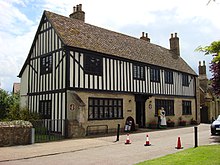
House in Ely where he lived a life of gentry When Cromwell's uncle died, he inherited this house, Ely, near Cambridge, England. Cromwell and family had lived in this delightful house in Ely for a time. A tour through the house included a
This home has been completely restored. Each room displayed very realistic figures, props and furniture narrative of his life in Ely.
history, life in that room. Each room displayed very realistic figures and perfect props.
What was unusual was that it was just after Easter, and the house still had plastic eggs throughout the house. A few on his Bible and rocking chair, even some on his deathbed (not accurate). The special effect in that room was lights dimming, Cromwell shook side to side. What was awesome was that there were some Easter eggs about the room, including one on his crotch.
It was very clear that Cromwell is revered in Ely and all over England where many bronze statues have been erected to pay homage to his accomplishments.
He died in 1658, buried with honor in Westminster Hall, until 1660, when Royalists returned to power. Cromwell was dug up. He had been interred in Westminster Hall with great honor. A year later he was dug up, without pomp and ceremony. This was supervised General George Monck, a former supporter of Cromwell, who jumped ships.
After Cromwell was disinterred, he was tried posthumously for treason, beheaded, while his body was hung in chains at Tyburn, (where criminals and others guilty of treason were executed). Without any ceremony, he was tossed into a common grave, minus his head.
BUT a storm knocked it down, causing the head to roll away. A soldier found it and decided to hide it in his home chimney. For decades his head passed from hand to hand, often being displayed in carnival shows. (This cannot be made up. Well documented and everything!)
A Dr. Wilkinson bought it and offered it to Sydney Sussex College in 1960. Cromwell’s head was finally re-buried in a secret place on college grounds.
Cromwell lived a life of religious fervor, where he was certain that he was doing God’s work. He will never be forgotten, in one way or the other. Religious fervor cannot be tolerated before it erupts in absolute anarchy. He did just that, as have other regimes.
Why would anyone care to learn about Cromwell? It is an incredible story, almost unbelievable in its horror and violence. If it were happening today in our own countries, what would we do? If it were occurring in some other country, what would be done?
This post has been heavily loaded in history and such. While living in Ireland, we learned much about Cromwell. Our son in first grade came home one afternoon furious, absolutely furious about what Cromwell and English had done to Ireland, as if it were just yesterday or maybe last week.
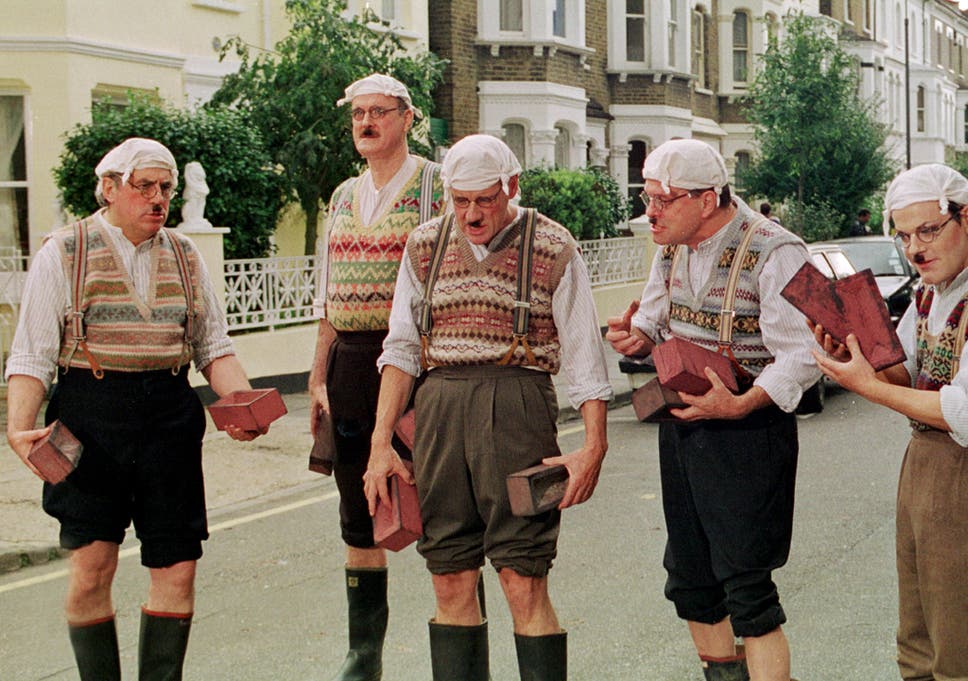
***To lighten this post, please listen to this Monty Python performance about...
This was posted back in 2017. Monty Python is brilliant.
We will be taking a train to see our babies in Chicago. I don't know if I will answer. BUT please make your comment here! I won't answer, but I will read!!
Growing up on a farm, I enjoyed the years of living just outside my hometown of 427 people. Most of the residents, their ancestors, and their descendants had lived in this area since 1820s.
When my own small family moved to Ireland in 1985, our adventures took us through small villages with their own populations, much like those of my hometown, only theirs dated back to 15th century, or further.
These villages and my own hometown had many similarities, including a church, store, farmers market, and pub (no pub at my old town).
Another striking similarity was the presence of locals who were referred to asthe “village idiots”. My parents explained this was not an insult, but was the only way to describe this part of the population. Their role in rural societies was seen in a variety of ways. Some were viewed with disdain, some with kindness, and some even with help in their lives. Whatever and however, the community accepted their own roles in the flow of the residents. Farmer, shopkeeper, housewife, teacher....and "village idiot" were all part of the population. I have to admit that I could see this and how it worked. While it deeply offended me to see a section of our society earmarked in this way, there was no breaking the chain.
After watching this episode of “Monty Python”, I was impressed by their explanations.
Thinking back to people I observed in my old town, every resident had a place in the flow of the community. I am not sure where I stood in that flow, but then, I moved away long ago.
P. S. I love Monty Python episodes, their unique sense of humor, and satire of the English society. I found this video, and decided to write around it. "Oliver Cromwell" song is very entertaining as is "Flying Sheep." The list is long and their humor unique. They are not for everyone.
Starting life on a farm, I enjoyed the years of living just outside my hometown of 427 people. Most of the residents, their ancestors, and their descendants had lived in this area since 1820s.
When my own small family moved to Ireland in 1985, our adventures took us through small villages with their own populations, much like those of my hometown, only theirs dated back to 15th century, or further.
These villages and my own hometown had many similarities, including a church, store, farmers market, and pub (no pub at my old town).
Another striking similarity was the presence of locals who were referred to asthe “village idiots”. My parents explained this was not an insult, but was the only way to describe this part of the populations.
But, after watching this episode of “Monty Python”, I learned how this came to be.
From YouTube, where Monty Python jewels reside
This relieves my mind, as I couldn't force myself to see people that way. My parents probably were not aware of this hidden training program.
P. S. I love Monty Python episodes, their unique sense of humor, and satire on the English society. I found this video, and decided to write around it. Hope no one is offended--that is certainly not my desire or intention.
Depending whether you are of English, Irish, or Scottish heritage,
the name “Oliver Cromwell” evokes entirely disparate emotions.***
Cromwell lived between 1599 – 1658, and was an intensely
religious man. Every event in his life, Cromwell believed was ordained and dictated by God.
After Elizabeth I died, succession was a royal mess. James? No, how about…down to Charles I (who was captured and beheaded). Much of it was related to two religions, two churches. Catholic king? Protestant king?
***If you wish to avoid all this reading, skip on down to Monty Python's telling about Oliver Cromwell.
Parliament became a total mess as well.
Dissolved, then “Rump Parliament” (honest to goodness, this was its title) was established, consisting of those who supported beheading Charles. It was a very nervous collection of men.
Oliver Cromwell tired of the back and forth of politics, proceeded to walk in with sizable military force under his command. He dissolved the Parliament session for a time.
To keep this Commonwealth from crumbling, Cromwell (with his loyal military) assumed charge of ensuing chaos, suppressing any and all uprising.
England was fairly easy to deal with, so Cromwell moved onto Ireland, where populations were heavily Catholic and were loyal to Charles.
To say Cromwell dealt harshly is ridiculous. His slaughter and subjugation of Ireland 1649-1653 resulted in near-genocide of all Catholics. Cromwell moved onto Scotland to do the same. In Ireland, if one says “Cromwell”, responses will vary,
but all vehement in some way. It was
fairly common for a big huff, a strong mucous spittle on the ground, a swear
word of some sort, and perhaps other actions.
Oliver Cromwell became Lord Protector of the
Commonwealth of England, Scotland, and Ireland. His ironfisted military control kept England together by absolute oppression.
House in Ely where he lived a life of gentry When Cromwell's uncle died, he inherited this house, Ely, near Cambridge,
England. Cromwell and family had lived in this delightful house in Ely for a time.
(By the way, this cottage has been well
restored. Each room displayed very
realistic figures and provided a spoken narrative of his life in that room.)
It was very clear that Cromwell is revered in Ely and all over England where many bronze statues have been erected to pay homage to his accomplishments.
He died in 1658, buried with honor in Westminster Abbey...
until 1660, when Royalists returned to power. Cromwell was dug up.
After Cromwell was disinterred, he was tried posthumously for treason, beheaded, while his body was hung in chains at Tyburn, (where criminals and others guilty of treason were executed). Without any ceremony, he was tossed into a common grave, minus his head.
BUT a storm knocked it down, causing the head to roll
away. A soldier found it and decided to
hide it in his home chimney. For decades his head passed from hand to hand,
often being displayed in carnival shows. (This cannot be made up. Well documented and everything!)
A Dr. Wilkinson bought it and offered it to Sydney Sussex
College in 1960. Cromwell’s head was
finally re-buried in a secret place on college grounds.
Cromwell lived a life of religious fervor, where he was
certain that he was doing God’s work. He will never be forgotten, in one way or the other. Religious fervor cannot be tolerated before it erupts in absolute anarchy. He did just that, as have other regimes.
Why would anyone care to hear about Cromwell? It is an incredible story, almost unbelievable in its horror and violence. If it were happening today in our own countries, what would we do? If it were occurring in some other country, what would be done?
This post has been heavily loaded in history and such. While living in Ireland, we learned much about Cromwell. Our son in first grade came home one afternoon furious, absolutely furious about what Cromwell and English had done to Ireland, as if it were just yesterday or maybe last week.
***To lighten this post, please listen to this Monty Python performance about...
Starting life on a farm, I enjoyed the years of living just outside my hometown of
427 people. Most of the residents, their
ancestors, and their descendants had lived in this area since 1820s.
When my own small family moved to Ireland in 1985, our
adventures took us through small villages with their own populations, much like ours, only theirs dated back to the 1700s, if not earlier.
These villages and my own
hometown had many similarities. Those are obvious, so they do not need to be listed.
However, one striking similarity was the presence of
locals who were referred to as the “village idiots”. My parents explained this was not an insult,
but was the only way to describe this part of the populations.
But, after watching this episode of “Monty Python”, I
learned how this came to be.
This relieves my mind, as I couldn't force myself to see people that way. My parents probably were not aware of this hidden training program.
P. S. I love Monty Python episodes, their unique sense of humor, and satire on the English society. I found this video, and decided to write around it. Hope no one is offended--that is certainly not my desire or intention.
Saying the name “Oliver Cromwell” elicits two
reactions, depending where it is said.
In England, Cromwell is viewed as the savior of a ragged nation, a poor
nation, after the monarchy made some unwise decisions.
His own decisions did not always work out well for him, as he was beheaded in 1540. The English regretted this decision a few decades later, deciding to exhume him and re-bury him in a place with more dignity.
However, in Ireland (Drogheda and Wexford, in particular), Cromwell is known as the slaughterer
of 500,000 Irishmen. As he marched
through the land, he killed the Catholics and some Protestants did not fare all
that well (especially the Presbyterians).
During a 1984 visit, we inadvertently walked in Cromwell's path and when we
said “Oliver Cromwell”, an Irishman would repeat the name, cough up some phlegm, and spit on the
ground. No more needed to be said.